Glacier Canyon Grindelwald: What the Glacier Left Behind
Most people see Grindelwald from above. From the Jungfraujoch, from First, from the Männlichen cable car. Looking up, looking out, looking across the Eiger north face.
The Glacier Canyon is the opposite of that.
The place a glacier left behind
Around 1600, it looked different here. The Lower Grindelwald Glacier was at its historic high point. The ice tongue reached down below 1'000 metres above sea level, lower than any Swiss village today. Parts of Grindelwald had to be relocated because the glacier, as one contemporary account put it, "overran one house after another." What is now the canyon was completely filled with ice.
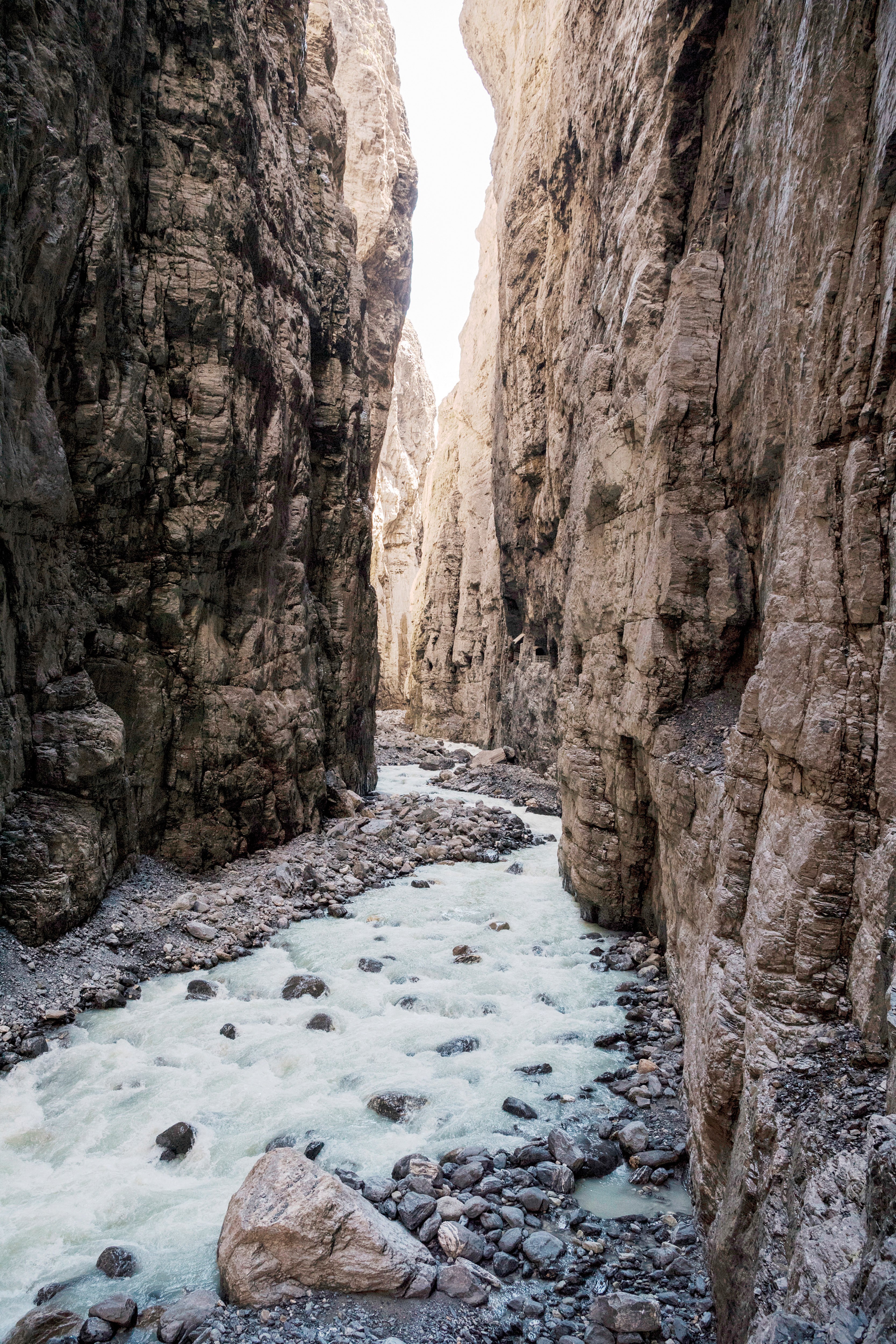
Then the ice pulled back. Slowly, over centuries. What emerged is what you walk through today: a kilometre of rock walls that once held ice, a riverbed where the Weisse Lütschine flows, still carrying glacial milk. That milky-white colour in the water comes from fine rock particles ground up and carried along by the glacier. You see it the moment you step onto the walkway.
It takes you two hours to walk through. The glacier took millennia.
What to expect, step by step
At the entrance you buy your ticket. Admission includes the Crystal Museum at the exit. No booking, no reservation. Then you start walking.
The first few metres: The shift happens fast. Outside: summer, sun, alpine meadows. Inside: 10 degrees, damp air, the Lütschine rushing below. The walls close in. The light changes.
The walkways and tunnels: The path leads about a kilometre in, along secured wooden walkways, through several tunnels and natural rock galleries. The passages are narrow, well lit, fitted with railings. No equipment needed, no mountain experience required. It's a walking path. Just carved into rock.
The information stations: Along the way there are six stations: geology, water, glacier, marble, myths. Worth reading or skippable, depending on your time. But one thing is worth knowing: those coloured layers in the walls are marble. Pink, green, and black marble, buried under the ice for centuries, first uncovered around 1864 as the glacier retreated. The canyon is one of the few places in the Alps where you see this coloured marble directly in the rock, not in a museum.
The Spiderweb: The highlight. A 170 m² net, stretched 7 metres above the Lütschine. You can step on it. No harness, no briefing. The net gives slightly underfoot, the river runs directly below, rock walls on both sides.
Seven metres below you: the Lütschine. Above you: nothing but net.
Kids run straight on. Adults come off more slowly.

Further in: After the Spiderweb the path leads through a tunnel, then through a gallery cut deep into the rock. On the walls you see polish marks left by the former glacier: smooth stretches where ice worked the rock for centuries with pressure and the stones it dragged along.
At the end: You turn around and walk back the same way. At the exit: the Crystal Museum with local mineral finds from the UNESCO Jungfrau-Aletsch World Heritage site, a shop, and the Café Gletscherschlucht.
The Spiderweb: why it's different
On the net you're not standing on a floor. There's no solid surface, no railing right in front of you. The net shifts when you shift. The Lütschine is 7 metres below, rock walls on both sides.
This isn't a viewing platform. You're not above the canyon. You're inside it.
And you're standing in a place that, a few centuries ago, was ice. Not water, not air, not walkway. Ice. The space you're taking up was part of the glacier for hundreds of years.
The Spiderweb is the only installation of its kind in any Swiss canyon. Other canyons have walkways, bridges, viewing platforms. Grindelwald is the only one that lets you stand directly over the river without solid ground beneath you.


When the Spiderweb isn't enough: the Canyon Swing
If you've done the Spiderweb and want more, it's right here in the canyon. The Canyon Swing starts from a platform 90 metres above the canyon floor. Free fall of roughly 50 metres, then up to 120 km/h swinging as a pendulum through the narrow rock walls. Seated, feet first.
It's not a classic bungee jump. You're not looking into open air. You're looking into the canyon. The swing runs through the narrow rock valley. That's the difference.
Loading video player...
The history that sits here
The Lower Grindelwald Glacier is probably the best-documented glacial retreat in the Alps. The Swiss landscape painter Caspar Wolf captured it in 1774 and 1777, when the ice tongue still reached far down into the valley. His paintings show ice towers that haven't existed for over a century.
In 1863, as the ice was retreating again, an unusual business started. The Bernese firm Schegg & Böhlen was granted a concession to commercially extract glacier ice. Blocks were sawn from the tongue, hauled by cart to Interlaken, and shipped onward by rail. As far as Paris, where the ice served as a cooling agent in restaurants and hotels. In the record year of 1864, over 17'000 hundredweight of glacier ice was exported. The industry only ended in 1914, when artificial refrigeration became widespread.
In the same year, 1864, the Bernese geologist Edmund von Fellenberg discovered the pink marble in the walls. Before that, it had been repeatedly inaccessible because the advancing ice kept burying it.
You don't see this history at a glance. But you walk through it, on walkways that were renovated in 2015, past walls that local mountain guides check for loose rock every spring, hanging off ropes. The canyon isn't a museum. It's maintained because otherwise it would take back what people wrested from it.

Why the canyon is better in the rain
Most attractions in Grindelwald need visibility. First, the Jungfraujoch, Männlichen: when the clouds hang low, the view disappears.
The canyon works differently. In the rain the waterfalls get stronger, the walls wetter, and the light more dramatic. The contrast between bright and dark sharpens. The Lütschine gets louder. The temperature barely changes either: inside the canyon it's a constant 10 degrees. At 30 degrees outside it feels like relief. At 10 degrees outside it feels like a damp cave.
So when the clouds are sitting on the peaks, the canyon isn't plan B. It's its own plan A.
Who it works for
The Glacier Canyon has no age restriction. Children under 6 enter free. Pushchairs can go on most of the route. Wheelchairs can reach about two thirds of the way. Dogs are welcome on a lead. Normal fitness is enough for the 2-kilometre walk (there and back), with barely any climb.
It's one of the few activities in the region that genuinely works for everyone: families with young children, older visitors, groups with mixed fitness levels. No booking needed, no time to miss, no preparation.
What you need to know
Season | May to November |
Opening hours | Daily, in summer until 8 pm |
Duration | 1–2 hours |
Adults | CHF 21 |
Children (6–16 years) | CHF 11 |
Under 6 years | Free |
Groups (10 or more) | CHF 19 |
School groups (10 or more) | CHF 9 |
Guest card discount | CHF 2 per person |
Tickets | On site at the entrance |
Address | Gletscherschlucht 1, 3818 Grindelwald |
Getting there:
- Bus 122 from Grindelwald station to the Gletscherschlucht stop (right at the entrance). About 15 minutes. Free with the Grindelwald guest card.
- Bus 120 from Grindelwald Terminal to the Aspi/Golf stop, then a 5–10 minute walk.
- On foot: around 30 minutes from the village centre.
- By car: A limited number of paid parking spaces right at the entrance. If full: the Grindelwald Terminal car park, then bus 120.
What to bring:
- Warm jacket (even in summer: the canyon stays at a constant 10 degrees)
- Sturdy shoes with a non-slip sole (walkways can be wet)
- Camera or action cam (no drones)
What's included:
- Canyon admission
- Crystal Museum access
Visit now
The Glacier Canyon Grindelwald is open daily from May to November. In summer until 8 pm. Tickets on site at the entrance, no reservation needed.
