The History of Glacier Canyon Grindelwald: From Seabed to the First Wooden Walkway
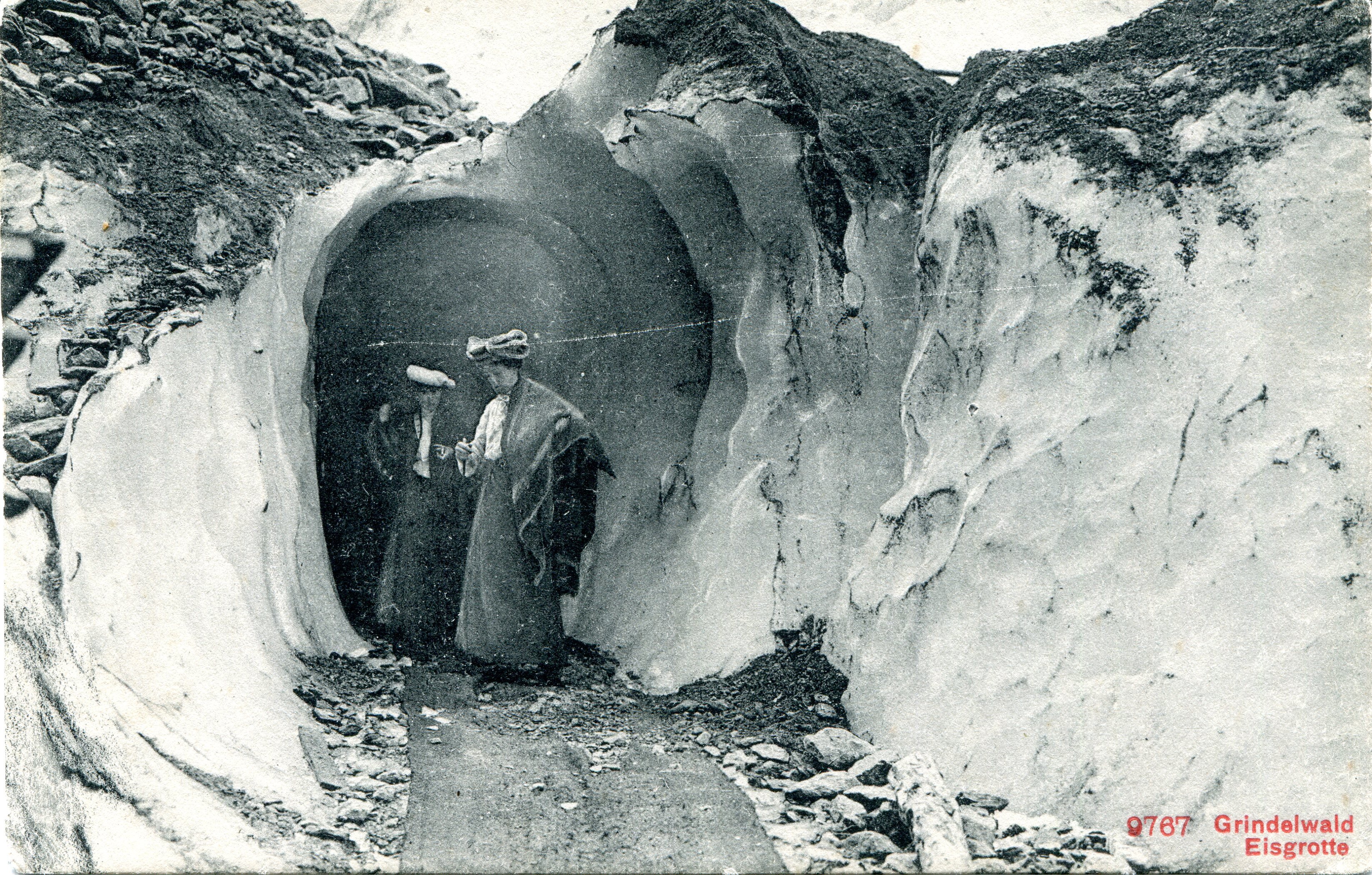
In 1857, the Lower Grindelwald Glacier ended around 200 metres further down the valley than today's canyon entrance. Where you walk on walkways today, there was ice. No attraction, no ticket desk, no path. Just a glacier, and locals who felt one thing above all: respect.
How this place became one of Grindelwald's oldest tourist attractions is what Marco Bomio explains in the video. The mountain guide and local historian knows the canyon like few others.
Loading video player...
What the video covers in a few minutes, this article takes up in detail. The story begins 150 million years before the first tourist.
From Seabed to 300-Metre Walls
More than 150 million years ago, there was a sea here. Sediments settled on the seabed and formed limestone. Around 15 million years ago, this limestone was folded up into the mountains that now stand above Grindelwald.
The canyon itself is the work of water and ice. While the rock was rising, water flowed constantly down the valley. Together with gravel and stones, it had enough force to cut up to 300 metres into the rock. The glacier acted like a plane on top of that: it ground the walls smooth and left behind the glacial polish you can still see in many places today. Meltwater under high pressure drilled round glacier mills into the rock.
During the last Ice Age, 10,000 to 20,000 years ago, almost all of Switzerland was covered by ice. After that, the glaciers advanced and retreated again and again. For long stretches of time, the canyon remained inaccessible: it was simply full of ice.
Glacier Canyon Then & Now


When the Glacier Threatened the Village
Around 1600, the Lower Grindelwald Glacier reached a historic high point. The ice pushed so far into the valley that part of the village had to be relocated. Contemporary accounts describe how the glacier overran one house after another. The glacier was not a sight to see. It was a threat to farms, pastures and livelihoods.
In the 18th century, the view changed. Naturalists began to study the glacier, painters captured it. Caspar Wolf painted the glacier tongue in 1774 and 1777, with ice towers at its end that have not existed for over a century. His paintings are now among the most important documents of glacial history in the Alps.
The last major high point followed in the middle of the 19th century. In 1857, the ice still reached down to around 200 metres below today's canyon entrance.
To see what the canyon looks like today, visit the Glacier Canyon Grindelwald activity page. Open May to November, tickets on site.


Ice for Paris, Marble for the Quarries
Before tourism became the main source of income, the canyon was a source of raw materials.
Around 1740, marble quarrying began at the edge of the glacier tongue. The stone comes in several colours: pink, black with white veins, green, multicoloured. The advancing glacier, however, kept burying the quarry, sometimes for decades. Only after 1864, when the ice retreated once more, was extraction stepped up. In the same year, the Bernese geologist Edmund von Fellenberg described the pink marble. Along today's walkway, the coloured marble is visible directly in the walls.
The ice was even more lucrative. In 1863, the Bernese firm Schegg & Böhlen was granted a concession for commercial ice extraction. A purpose-built road led from Grindelwald-Grund to the glacier tongue. The blocks went by rail to Interlaken and on to hotels and hospitals across Switzerland, where they kept food and medicines cool. Written records show deliveries as far as Paris and Prague. In the record year of 1864, 17,473 hundredweight of ice were extracted. The business only ended in 1914, when artificial refrigeration made glacier ice obsolete.


The Schläppi Brothers and the First Walkway
As long as the canyon was full of ice, it remained inaccessible. For the first tourists, locals carved caves into the ice so visitors could see the glacier from the inside. That, too, was already a source of income.
Around 1875, the ice in the lower part of the canyon had disappeared. Two brothers by the name of Schläppi built a wooden walkway into the canyon so visitors could enter it. And they came up with more than just the walkway: they set up a mortar, a type of cannon. Anyone who paid 50 centimes, the French-derived name for Swiss cent coins at the time, was spending a lot of money: a labourer in the region earned around 2 to 3 francs per day, so the cannon shot cost a good hour and a half of work. In today's wages, that is roughly 50 francs. In return, a shot was fired, and the echo rolled through the canyon.
Maintaining the wooden walkways was demanding and dangerous from the start. The work was done in winter where possible, amid snow, falling ice and avalanche risk. The effort grew so large that in the 20th century the local tourist association took over the canyon and continued to develop it. Later came the tunnels, blasted and carved into the rock.


Walk the Path Yourself
What Is Still Everyday Work Today
The mortar is gone, the ice trade is history. What remains is the effort. Every spring, before the canyon opens, mountain guides check the walls for loose rock, hanging from ropes. Only then do the walkways open.
The canyon has thus been a maintained path through a piece of Earth's history for around 150 years. What has changed is how we look at it: the threat of 1600 became a place where the retreat of the glaciers can be read more directly than almost anywhere else in the Alps.
To find out what a visit feels like today, from the entrance to the Spiderweb, read the main article: Glacier Canyon Grindelwald: What the Glacier Left Behind. Or walk the path yourself: Visit Glacier Canyon Grindelwald. May to November, in summer daily until 8 pm, tickets on site.


