Drytooling – With Pascal Kolly
Drytooling – With Pascal Kolly
It’s late autumn, there’s not enough snow for a ski tour, and it’s too cold for sport climbing – yet you still feel like moving vertically. Dry tooling is a demanding sport and a perfect alternative to sport climbing, as well as an ideal complement to the typically short ice climbing season. Pascal Kolly shares what matters when it comes to dry tooling and the pros and cons compared to ice climbing.
What is dry tooling?
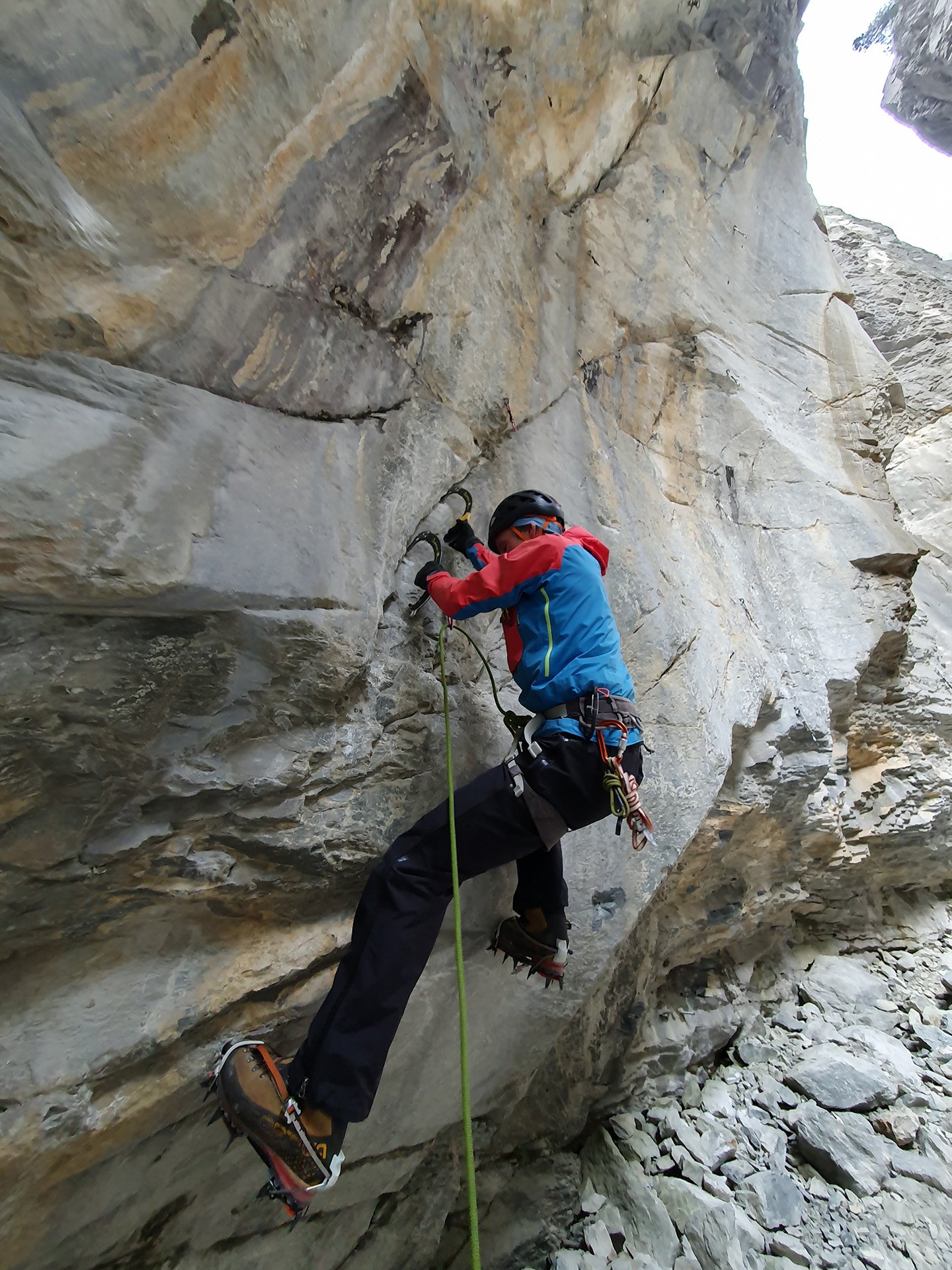
This sport is practiced on rock using the same equipment as ice climbing. That makes it perfect preparation for climbing on frozen waterfalls. If you don’t enjoy indoor climbing and prefer being outside, dry tooling might just be your thing.
What are the requirements for dry tooling?
Your interest, first and foremost. It helps to have prior knowledge in climbing and belaying, and to know how to handle ice axes and crampons. Since dry tooling usually takes place on vertical to overhanging rock, a strong upper body is definitely useful.
What are the differences between dry tooling and ice climbing?
- Approaches to dry tooling areas are often short, making it easier to reach the site or call it off due to a change in weather.
- When conditions aren’t suitable for ice climbing due to weather or poor ice, tooling offers the perfect alternative.
- Dry tooling is done in climbing crags with pre-bolted protection points, meaning falls are generally shorter and safer. Ice climbing, on the other hand, involves choosing and protecting your own routes.
- Because it takes place on overhanging rock, dry tooling is physically more demanding.
- In my opinion, ice climbing requires more skill to accurately assess the quality of the ice. In contrast, rock is relatively consistent and safe.
- Ice climbing also demands significantly more gear – countless ice screws for protection, and much more clothing to deal with cold and wet conditions.
What do you personally enjoy more?
Honestly, I’m a fan of ice climbing, as long as conditions are right. The ambiance, the allure, and the environment are truly one-of-a-kind.
Unfortunately, the season is often quite short, which is why I now often use dry tooling as a form of training.
Where can I go dry tooling in the Bernese Oberland?
There are plenty of dry tooling opportunities in the Bernese Oberland and around Grindelwald. You can find more information in the topo book Drytooling & Mixe Suisse Ouest by Simon Chatelan.
Can I climb in any weather?
As long as the climbing area is overhanging, you can really train year-round, in any weather. I typically dry tool from October to the end of winter, since I climb on rock in the summer.
What specific techniques should I be aware of?
Dry tooling mainly involves “hooking.” That means the ice axe isn’t swung like in ice climbing, but rather placed or hooked into natural rock features or specially drilled holes.
The moves tend to be fairly long, and the body should ideally remain centered beneath the tool.
Various technical aspects like "straight arms" and "twisting in" are used in both dry tooling and sport climbing.
For more info on dry tooling techniques, check out the instructional book Steep Frozen by Peter von Känel.

Isn’t dry tooling scary—using ice axes and crampons on rock? The risk of injury must be pretty high, right?
There are definitely routes or long moves that scare me, where I really have to push myself. The next hook is often quite far away, and climbing in overhangs can be very strenuous.
Handling crampons and ice axes always carries some risk of injury—not just for the climber, but also for the belayer. Falling isn't without danger either, even though overhangs generally offer a good fall zone.
You have to handle the sharp tools carefully. Trust in the equipment and in your own ability needs to be built up step by step. But once that’s in place, the sport becomes really fun.
Any final tips?
Compared to ice climbing, dry tooling is relatively safe. So: embrace the experience and just give it a try. Maybe it’s something for you! And if not, at least you’ve tried it.
Make sure to wear warm clothes and bring some hot tea, because it can definitely get chilly. And if, in the future, the ice climbing season falls victim to warm temperatures—don’t panic, you can always train on rock.
I can absolutely recommend it.

The interview was conducted with Pascal Kolly. He has two children, lives in Grindelwald, and works with the mountain specialists of the cantonal police in Interlaken. In his free time, much of his life revolves around mountain sports—whether it’s climbing, ski touring, high alpine tours, mountain biking, or, for the past six years, his fascination: dry tooling.
Recommended Courses

Taster Course Drytooling

1/2 day including course certificate
Climbing on rock with crampons and ice axes? Yes, it’s possible! Try out this exciting new trend sport.
More information

Taster Course Ice Climbing
1 day including course certificate
Are you active and looking to try something new? Our Introductory Ice Climbing Course offers the perfect challenge – designed for beginners.
More information

Basic Course Ice Climbing
2 days including course certificate
Have you always wanted to climb a frozen waterfall? Then this Basic Ice Climbing Course is just right for you.
More information