Powder Off-Piste
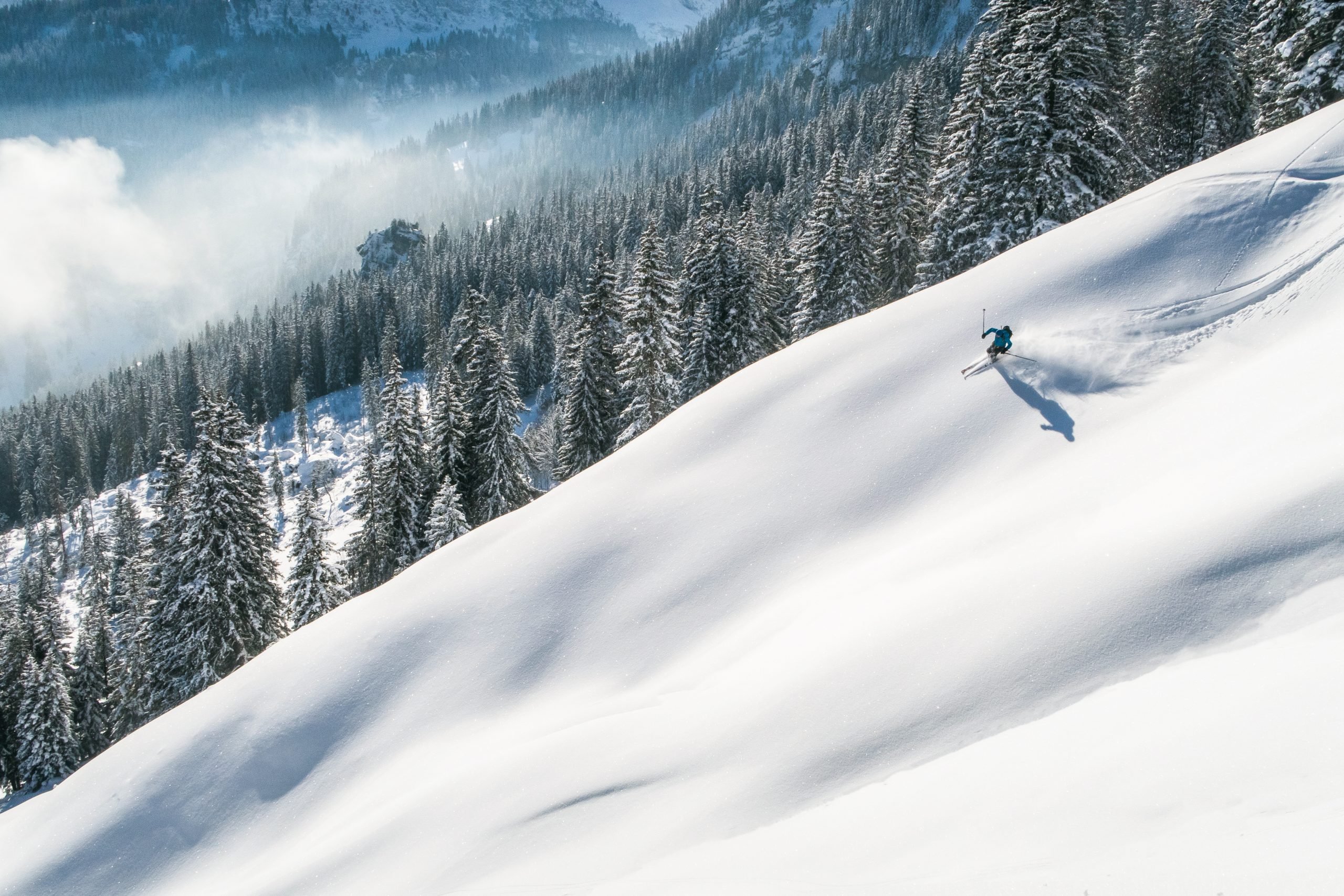
Powder Off-Piste
An interview with snow sports instructor Nina Blaser
How did you get into off-piste skiing?
My father motivated the whole family. On my first two tours, I was the youngest – and therefore the slowest – in the family. My motivation wasn’t very high, believe me. But now I absolutely love skiing in deep powder!
What fascinates you off the groomed slopes?
I’m fascinated by the freedom it offers. I can ski almost anywhere, as long as there are no wildlife protection zones or heightened avalanche risks.


What role did off-piste skiing play in your training?
I completed two courses in the freeride field. Without the necessary knowledge, skiing off secured slopes quickly becomes dangerous. A deep snow course helps build essential awareness.
What excites you about teaching?
It’s simply wonderful to share the passion. I pass on my skills and see the joy when guests make progress. Especially in deep snow skiing, many struggle with starting a new turn. They try to force the skis into the new direction with lots of power. When they realize – through a few tips and exercises – that it can be done without much effort, the joy is priceless.
Who is the introductory deep snow course for?
The course is for those who are fascinated by untouched, white snowfields, can ski red slopes without difficulty, and have little experience with off-piste skiing. Even with good technique, deep snow skiing is physically demanding. That’s why you should be fit enough to ski off-piste for a full day. If ease in skiing is still lacking, this intro course is the perfect choice.
What can guests expect from the course?
The goal is to feel comfortable. We usually start by warming up on the piste. That allows me to observe my guests' technique and give feedback on their turns. Then we apply that technique in the deep snow. This approach creates a relaxed learning environment, so even guests with a lot of respect for deep snow feel confident and satisfied.
What equipment is needed?
You’ll need your personal touring, freeride, or alpine ski equipment. In addition, everyone needs an avalanche transceiver (LVS), a shovel, a probe, and a backpack. Missing gear can be rented from Outdoor.
What’s the next step after the course?
To continue enjoying deep snow adventures or to deepen your knowledge, I recommend booking a basic or advanced course at Outdoor’s mountain sports school.
If you want to spend more time off-piste, a basic avalanche course is also a great option. For those interested in ski touring, an intro or basic ski touring course is highly recommended.
What’s your tip for our readers?
I often see people using a lot of force to initiate turns in deep snow. Give your ski a bit of time – it’s designed to help you.

