Weather and Skydiving: Why Cancellations Happen (And Why It's a Good Thing)
Picture this: You are standing at the edge of the airfield, looking up at the mountains. The engine is humming, your heart is racing, and you are ready for the jump of a lifetime. But then, the pilot shakes his head. The jump is off.
It feels disappointing, right? I get it. You traveled all this way to Interlaken, and you are ready to go. But weather cancellations, while frustrating, are actually a sign that you are in good hands. They are a normal, essential part of our sport.
Let me explain why the weather has the final say and what it means for your safety.
The Power of Nature vs. Your Schedule
When we play in the mountains, we play by nature's rules. This is true for hiking, climbing, and especially for skydiving. We operate in an element we can't control: the air.
While you might look up and see a patch of blue sky from the ground, things can look very different at 13,000 feet. There are three main factors that decide whether we fly or stay grounded: Wind, Visibility, and Rain.
Wind: The Invisible Boss
Wind is the most critical factor in skydiving. It’s not just about whether it feels breezy on your face down here. It’s about wind speeds at different altitudes and, crucially, the wind direction.
Strong wind can make the exit from the plane unstable. But it gets even more important when it's time to open the parachute and land. A modern parachute acts like a wing. We steer it, and ideally, we land into the wind to slow down for a gentle touchdown.
If the wind is too strong or gusty (turbulence), the landing becomes unpredictable. You could be pushed backward or risk a hard landing. Here in Interlaken, surrounded by high peaks, we also have to watch out for special mountain winds like the "Föhn." These can create conditions that feel calm on the ground but are dangerous up in the air.
Visibility: Why We Need to See
You might have seen cool videos of skydivers punching through clouds. It looks dramatic, but in reality, we follow strict Visual Flight Rules (VFR). This simply means: We need to see where we are going and where we are landing.
Fog or a solid layer of clouds blocks our view of the landing zone. If your tandem master can't see the ground, we don't jump. It's about orientation and avoiding collisions with other jumpers or aircraft.
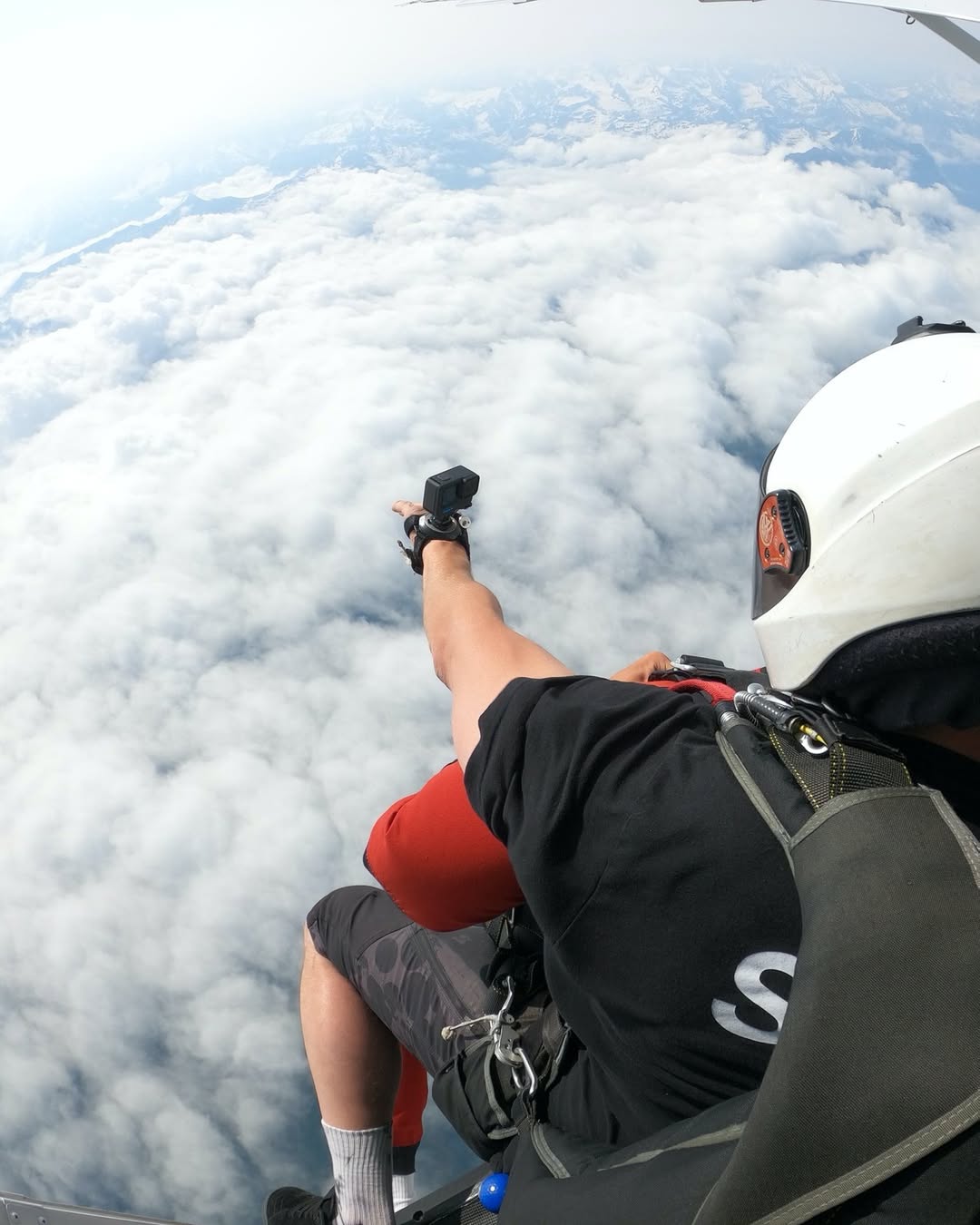
Sometimes, we have a solid cloud layer at 6,000 feet, even if the sun is shining above it and it’s just gray below. To jump safely, we need a big enough "hole" or a clear zone right over the dropzone.
Rain: Needles at 120 mph
Rain is more than just uncomfortable. In freefall, you are moving at about 120 mph (200 km/h). At that speed, raindrops feel like tiny needles hitting your face and hands. It turns a joyride into a painful experience very quickly.
There is also a technical reason: Parachutes are made of fabric. If they get wet, they soak up water and get heavy. This changes how they fly and steer, often making the landing faster and harder than we want. Plus, moisture isn't great for our expensive gear in the long run. That’s why we wait out even short showers before taking off again.
Safety First: The Hardest Decision
Calling off a jump is the toughest decision we make, and we know it's the most disappointing one for you. But please understand one thing: We never make this choice lightly. We want to be in the air just as much as you do. But more than that, we want you to land safely.
Relying on Expert Eyes
Our pilots and tandem masters have thousands of jumps and flight hours. They know the micro-climate of the Swiss Alps inside out. They know how fast weather can turn in the mountains. An experienced skydiver can almost "feel" when something isn't right in the air.
They don't just look at weather apps. They watch how the clouds are building, how the trees are moving on the ridges, and checking the wind socks at the dropzone. We are also in constant contact with air traffic control (Skyguide) to get the full picture. If a pro says "not today," there is always a solid reason.
Clear Limits, No Guesswork
In skydiving, there is no "maybe." We have strict limits for wind speeds and visibility set by safety associations and our own operating procedures. If the weather hits those limits, the plane stays on the ground. Period.
These rules aren't there to ruin the fun; they are there to save lives. We never take risks just to keep a schedule. Safety is always the number one priority. This is why you might see us waiting on the ground even if the weather looks "okay" to a layperson. We see the invisible risks you might miss.
What Happens If We Cancel?
So, you prepared mentally, you traveled here, and then you get the bad news. It stings. But it's part of the sport. Here is how we handle it together.
Flexibility is Key
We always give this advice to newcomers: Don't schedule your skydive for the very last day of your trip.
If the weather doesn't cooperate, you need a Plan B. Try to book your jump at the beginning of your stay in Interlaken. If we have to cancel, we always try to reschedule first. Maybe the sky clears in the afternoon? Maybe tomorrow morning is perfect? We stay flexible and keep you updated honestly. Often, hanging out at the dropzone waiting for a weather window becomes a fun part of the memory!
Money Back Guarantee
If we absolutely cannot find a new slot—because you are leaving Switzerland or the weather is bad for days—you do not lose your money. You get a full refund. We do not charge for services we cannot provide safely. Your trust means more to us than the revenue of a single jump.
Conclusion
Conclusion
Weather cancellations are a fixed part of the skydiving experience. They aren't a sign of bad organization; they are proof of professionalism and safety consciousness.
There is an old saying among aviators: "It is better to be on the ground wishing you were in the air, than to be in the air wishing you were on the ground."
Trust the decision of the experts. When we say "Let's go," it means it's safe, and it's going to be amazing.
Are you ready for your adventure? If the weather plays along, there is nothing like it.