Your Tandem Skydive: A Step-by-Step Guide
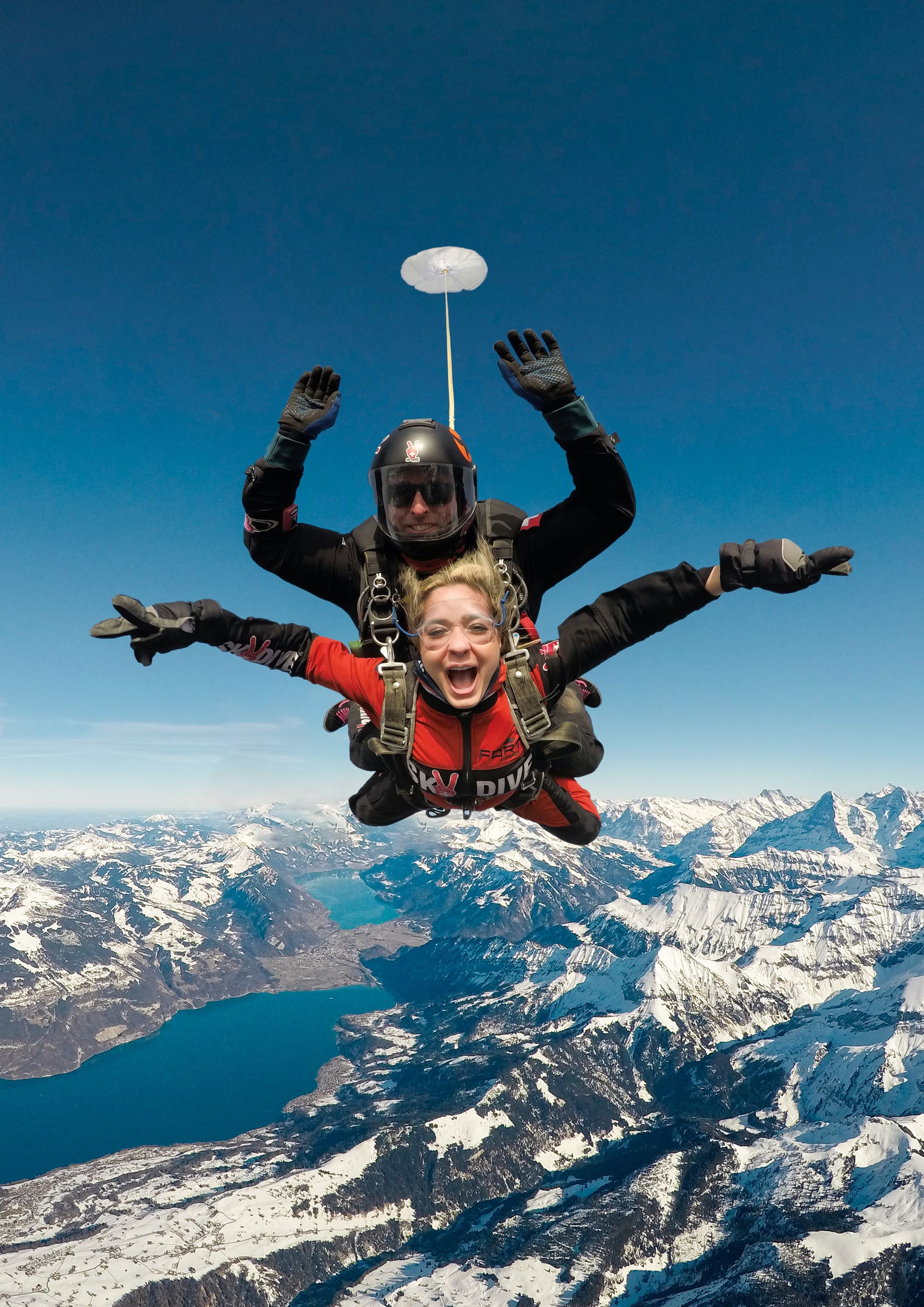
Picture this: the door of an airplane slides open at 13,000 feet (4,000 meters). Cool mountain air rushes in, and below you stretch the snow-capped peaks of the Swiss Alps. A tandem skydive is so much more than that single moment of leaping; it's a journey we'll take together that will challenge and reward you in ways you never imagined.
Let me walk you through what really happens on your skydive day. I'll share what I've witnessed countless times, from that first handshake on the ground to your safe landing in the grass. You'll know exactly what to expect, and I'll be right there with you every step of the way.
Before the Jump: Getting Ready
Your adventure begins long before you step into the airplane. The preparation is where we build the trust and confidence you'll need up there. It's all about setting you up to soar.
Arrival and Check-In
When you arrive at our base, we start with a bit of paperwork. Don't worry - it's just checking your booking details and making sure everything's in order. We need to verify that your weight and age meet our safety requirements, but this is all routine.
Then comes the liability waiver. I know it might make your heart skip a beat - this is when it really hits you that you're about to jump out of a plane! But remember, we've done this thousands of times.
Next, you'll meet your tandem master - your partner for this incredible journey. Our instructors have this calm, reassuring presence that comes from years of experience. They'll take a look at you, assess your build, and walk you through what's coming. This is your moment to ask anything that's on your mind. Trust me, there are no silly questions when you're about to skydive.
Briefing and Getting Geared Up
Now we get hands-on. You'll slip into a jumpsuit over your clothes. Here's what works best: comfortable athletic wear and sturdy, lace-up sneakers. Those sandals might look good, but they won't stay on your feet at 120 mph (200 km/h)! The jumpsuit keeps you warm and protects your clothes - it gets pretty chilly up there.
Your instructor will help you into the harness. Many people are surprised by how snug it feels, but think of it as a very secure hug. We'll tighten the straps around your legs and shoulders - this is what keeps you safe and comfortable when that parachute opens.
Finally, you'll get goggles. If you wear glasses, we have special ones that fit right over them. These aren't just for show - without them, the wind would make your eyes water so much you'd miss all those incredible views.

The Ascent and The Leap
With your gear on and final checks complete, it's time to board the plane. The excitement is building, and you'll feel that focused energy in the air.
The Flight to Altitude
We'll board our specially designed plane together. The seating is cozy - you'll sit on the floor or low benches, usually between your instructor's legs.
The pilot fires up the engine, and up we go. The flight to jump altitude takes about 15 to 20 minutes, and honestly, many people get so caught up in their nerves they forget to enjoy this part. But you shouldn't miss it - we're flying over Lake Thun and Lake Brienz, and those massive faces of the Eiger, Mönch, and Jungfrau are getting closer and closer. The view is absolutely spectacular. I'll point out landmarks and chat with you if you seem nervous. Take it in - it's rare to see our Alps from this angle.
The Final Moments Before the Jump
About five minutes before we reach altitude, things get focused. I'll signal that it's time to connect your harnesses. There are four attachment points - two at your shoulders and two at your hips. You'll hear those carabiners click into place. From this moment, we're a team.
Time for goggles. I'll do one last check of everything - straps, connections, the works. You might feel me tap your shoulder or see a thumbs-up. Talking is nearly impossible over the engine noise now, so we use hand signals. Your heart is probably pounding - that's completely normal. Your body is just getting ready for something amazing. Take deep breaths in through your nose, out through your mouth. It really helps.

Freefall and Parachute Flight
The airplane levels off. The engine quiets down, and a light signals it's time.
The Feeling of Freefall
Someone slides that door open, and suddenly the roar of wind and propellers fills everything. You'll watch the first pairs move to the door and simply disappear into the sky. For many, this is the most surreal moment of their lives.
Then it's our turn. We slide to the edge together. All you need to remember is what we practiced: head back, hips forward, legs bent behind you - the "banana" position. This keeps us stable. The exit doesn't feel like falling off something - because we're moving forward with the plane, it's more like being gently placed onto a cushion of air.
Within seconds, we're flying at 120 mph (200 km/h). I wish I could describe this feeling perfectly, but it's unlike anything else. It's not like an elevator dropping - it's like floating on this powerful column of air. The wind pushes against you, and there's this incredible rushing sound. Without reference points flying past, you won't feel dizzy. It's pure energy and absolute freedom, and it lasts about 45 seconds that feel like a lifetime.
The Parachute Opens
At around 5,000 to 5,500 feet (1,500 to 1,700 meters), I'll deploy our parachute. It's not the violent jolt you see in movies - more like a firm but gentle braking that lifts you into a comfortable, seated position.
Suddenly, it's peaceful. The rushing wind is gone. You're hanging comfortably in your harness, and I'll check that you're okay. You can take off your goggles now. That intense energy of freefall gives way to an almost meditative calm as your mind tries to process what just happened.

The Landing and After
The canopy ride lasts about 5 to 7 minutes - this is the relaxing part where you can truly take in those incredible views.
Flying the Canopy
I steer our parachute with two control lines. If you're up for it and conditions are right, I can let you try steering - feel what it's like to fly. Want more excitement? I can fly some spirals that create fun G-forces. Prefer to just relax and soak it all in? We'll glide gently toward our landing zone. Below us, you can see Interlaken, the lakes, and that small dot that's our landing field.
A Safe Touchdown
Just before we land, I take full control. Here's the most important thing for you: legs up! Lift your legs and hold them out in front so we can land by sliding in on our behinds. This is the safest way to land, and it prevents any ankle injuries. We'll glide to a gentle stop on the grass.
Once you're standing, you'll feel that adrenaline coursing through you. I've seen people laugh, cheer, or just stand there speechless. I'll help you out of the harness, and then it hits you - you did it. You actually jumped out of a plane and loved every second.
Key Facts About Your Skydive
Here are the numbers that paint the picture of your adventure:
- Jump Altitude: Approx. 13,000 ft / 4,000 m
- Freefall Time: Approx. 45 seconds
- Freefall Speed: Up to 120 mph / 200 km/h
- Parachute Ride: Approx. 5-10 minutes
- Total Trip Duration: Approx. 3.5 hours from Interlaken
Conclusion
A tandem skydive is an experience that reaches deep into your soul - it's so much more than just a thrill.
When you know what to expect at every step, that natural fear transforms into pure excitement. You'll be in the hands of professionals who've done this thousands of times, which means you can focus completely on the magic of the moment. The question is: are you ready to discover what you're truly capable of?
