What to Wear for River Rafting on the Lütschine: The Complete Guide
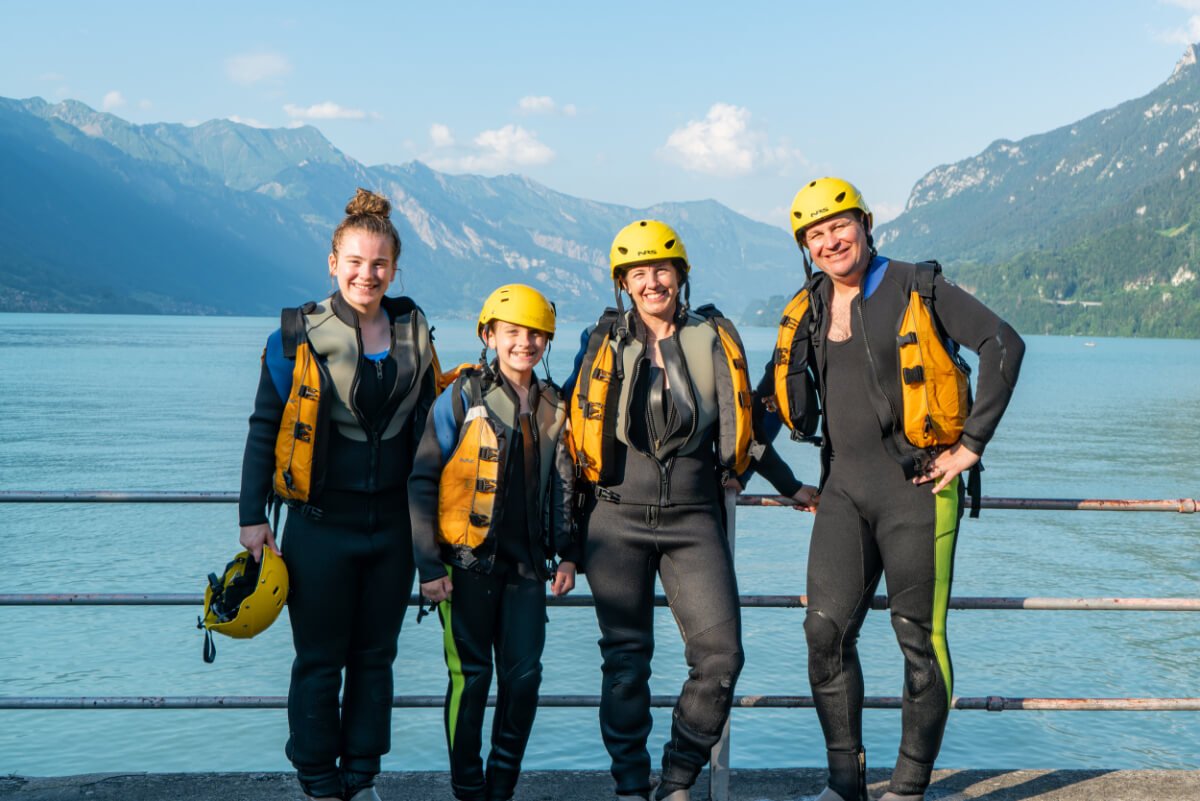
The packing list on the booking page says swimwear and a towel. That's accurate, and it's also the minimum. Here's the fuller picture of what to wear, what to leave behind, and why the gear you're given matters more than anything you bring yourself.
The short version: OUTDOOR provides everything you need on the water. Your job is to show up in the right base layer and not bring anything you'd mind getting soaked.
What OUTDOOR Provides
Before getting into what you bring, it's worth being clear about what's already waiting for you at the Base:
Wetsuit: Full-length neoprene. This is the layer that keeps you functional in glacial water. It traps a thin layer of water against your skin that your body heats up, insulating you from the cold. It's not dry. It's not warm in the conventional sense. But it works, and without it the Lütschine's water temperature would make the tour genuinely unpleasant rather than just cold.
Life jacket: Worn over the wetsuit. Keeps you at the surface in moving water. Non-negotiable.
Helmet: Protects your head from rocks and the boat. Fitted at the Base before departure.
Water shoes: Closed-toe, secure, and designed for wet conditions. These replace whatever you arrive in. Don't bring sandals or flip-flops expecting to wear them on the water.
Paddle: Provided at the put-in.
Everything is fitted at the Base before the shuttle to the river. You don't need to bring or buy any of this.
River Rafting in Interlaken
What You Wear Underneath
This is where your choices actually matter.
Swimwear: Worn directly under the wetsuit. Board shorts, bikini, one-piece: any swimwear works. The wetsuit goes over it. Avoid anything with metal zips, buckles, or hard seams that will press into your skin for two hours. Soft, fitted swimwear is the most comfortable option.
Sports bra or rash guard (optional): Some people find a thin rash guard or sports top more comfortable under the wetsuit than swimwear alone. It adds a minimal layer and reduces friction. Not necessary, but worth considering if you run cold or have sensitive skin.
What not to wear underneath: Cotton. A cotton t-shirt under a wetsuit gets wet, stays wet, and provides zero insulation. It will make you colder, not warmer. Leave it in the changing room.
What to Bring to the Base
Towel: You'll want it after the Lake Brienz swim and after the shower at the Base. A compact travel towel works well. A full beach towel also works. Either is fine.
A change of clothes: Dry clothes waiting after the shower are worth planning for. Something warm is a good idea, particularly in May and June when the air temperature is cooler. Jeans are fine. A light layer on top is better than nothing.
Footwear for after: You arrive in whatever shoes you travel in. Water shoes are provided for the tour. After the shower, you'll want your own shoes back. Anything easy to slip on works.
A bag for wet gear: Your swimwear comes out of the wetsuit wet. Having a waterproof bag or a plastic bag for wet items saves your dry gear from getting damp on the way home. A dry bag is ideal but not required.
No video URL available. Source: library, YouTube ID:
What to Leave Behind
Some things don't belong on a rafting tour and are better left at the Base or in your accommodation:
Jewellery: Rings, necklaces, and earrings can catch on equipment, get lost in the water, or cause injury in a rapid. Leave them out.
Contact lenses: If you can avoid them, do. Getting water in your eyes on a Class IV rapid while wearing contacts is not pleasant. Glasses are also a risk but easier to manage with a strap. If you need vision correction, a sports strap for glasses is worth having.
Cameras and phones: The professional photographer covers the tour. Your phone won't survive in a wetsuit pocket on the Lütschine, and a GoPro on a head mount won't give you better images than what the photographer produces from the bank. Leave valuables locked at the Base. Lockers are available.
Cash or cards on your person: Pay for any extras (photo packages, additional drinks) at the Base after the tour. Nothing in your pockets on the water.
Early Summer: One Extra Consideration
In May and June, the water temperature sits around 8 to 10 degrees Celsius. The wetsuit handles it. Your face and hands don't have that protection.
Some people bring thin neoprene gloves for early summer departures. They're not provided and not required, but if you run cold in your hands and plan a May or June trip, it's worth considering. The guides can advise on the day.
For everything on why early summer is the most intense window on the Lütschine, read why May and June hit different.
For the full tour overview from briefing to Lake Brienz, the complete River Rafting Lütschine guide covers it all.