Winter Skydive Packing List: How to Dress for 13,000 Feet
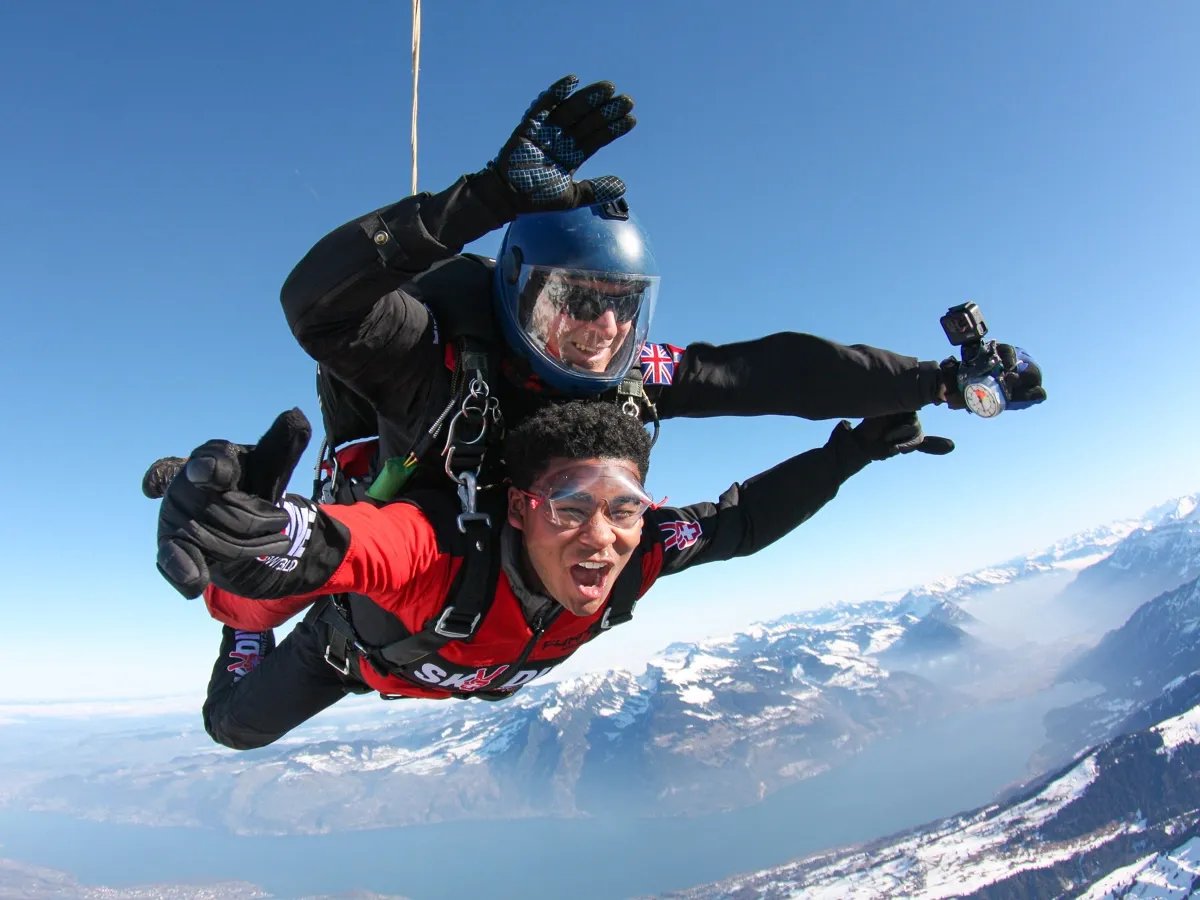
Imagine the helicopter door sliding open at 13,000 feet. Suddenly, icy air rushes into the cabin, and below you, the snow-covered peaks of the Eiger, Mönch, and Jungfrau glitter in the sun. In this exact moment, one thing decides if you can fully focus on the freefall or if you're just thinking about your freezing fingers.
To ensure your winter skydive is pure joy and not a shivering ordeal, I'm going to show you exactly what gear you really need and how to prepare perfectly. Don't worry—we’ve got the technical stuff covered; you just need to bring the right layers to keep comfortable.
Why the Cold Hits Different Up Here
Before we pack your bag, let's talk a little physics—simple stuff, I promise. A winter day on the ground in Interlaken might feel manageable, but up there, it's a different world. The temperature drops about 3.5 degrees Fahrenheit for every 1,000 feet of elevation (Source: National Weather Service).
That means if it's a comfortable 32°F (0°C) on the ground, it can easily be -13°F (-25°C) or colder at jump altitude. Add in the wind chill factor—you are falling at around 120 mph, after all—and that air strips heat from your body fast.
But here is the good news: With the right strategy, you'll barely notice the cold. You'll just be enjoying the rush.
The Onion Principle: Your Strategy Against the Freeze
Forget that one massive down jacket. In skydiving, we rely on the proven "layering" system (the onion principle). The goal is to trap warm air between thin layers and wick moisture away from your body. This makes you flexible for changing conditions.
1. The Base Layer (Your Second Skin)
This is where you don't compromise. This layer sits right against your skin.
- Material: Go for Merino wool or high-quality synthetic fibers.
- Avoid Cotton: Cotton soaks up sweat and then cools you down. Since you'll likely sweat a bit from the adrenaline before the jump, a wet cotton shirt becomes your enemy in freefall.
- Fit: Snug, so no cold air pockets can form.
2. The Mid Layer (Insulation)
This layer keeps the warmth close to your body.
- Recommendation: A fleece pullover or a thin wool sweater.
- Important: Choose a top without a hood. Hoods can flap uncomfortably in the wind during freefall, puff up, or block your view. A high collar, however, is worth its weight in gold.
3. Don't Forget Your Legs
Many people focus only on their upper body, but your legs get cold too.
- Long Underwear: Leggings or thermal underwear beneath your normal pants are mandatory in winter.
- The Pants: Choose comfortable athletic pants or flexible outdoor trousers. Jeans are often too stiff and hold the cold. You need to be able to move well for boarding the aircraft and for the landing (legs up!).
Hands, Feet, and Head: The Critical Zones
Your extremities are furthest from your heart and cool down first. We need to pay special attention here so you can high-five us comfortably after landing.
Gloves
We provide you with gloves, but in winter, I recommend the "Liner" system.
- Thin Inner Gloves: Wear your own thin silk or synthetic liner gloves.
- Outer Layer: Put our thicker gloves over them. This keeps your fingers warm but still nimble enough to grab your harness.
Footwear
This is where I often see mistakes. Sneakers are okay for summer, but in winter, you need more substance.
- Closed and Secure: Your shoes must lace up tightly. Slip-ons or loose boots can fly off at 120 mph—and we don't want that!
- Warm Socks: A pair of thick wool socks is essential. Just make sure you can still wiggle your toes inside your shoes—squished feet get cold faster.
Head and Neck
A helmet and goggles are standard, but you can optimize what goes underneath.
- Buff / Neck Gaiter: A snug neck tube (Buff) is perfect. It protects your neck and can be pulled up over your chin.
- Balaclava: In very cold temperatures, a thin balaclava under the helmet is very comfortable.
What We Provide (The Outer Shell)
You don't need to arrive at the airfield looking like the Michelin Man. We equip you with the specific outer gear:
- Jumpsuit: This goes over your clothes. It's made of robust material, blocks the wind, and protects your own clothes from grass stains or moisture during landing.
- Goggles: These protect your eyes from the massive wind blast and stop them from tearing up. Contact lens wearers? No problem, you can wear them underneath.
- Leather Hat: Keeps your ears warm and holds the goggles in place.
What to Leave Behind
Safety comes before style. Some items are dangerous in freefall:
- Thick Scarves: Anything that can come loose or get tangled is prohibited. Use the Buff mentioned above instead.
- Jewelry and Watches: Rings can slip off fingers in the cold. Necklaces can snag. Leave anything valuable on the ground or in our lockers.
- Cameras: For safety reasons, you cannot bring your own GoPro or phone. We need your hands free and your focus sharp.
Body Prep Before the Jump
Your clothes are only half the battle. Your body needs energy to produce heat.
- Eat: Don't come on an empty stomach. A light meal 2–3 hours before the jump stabilizes your circulation. Your body burns a lot of energy dealing with the cold and adrenaline.
- Drink: Hydration is important, even in winter. But avoid alcohol the night before—it dilates your blood vessels and makes you freeze faster (and is a no-go for jumping anyway).
After the Landing
Once you've landed and the adrenaline slowly fades, you might realize you've been sweating. Bring a fresh T-shirt and maybe a warm beanie for the trip back. There is nothing better than getting dry and warm after the adventure while watching the video of your jump.
Conclusion
A winter skydive over the Alps is visually unbeatable—the clear air and the snowy mountains are magic. With the onion principle, good socks, and a Buff, you are perfectly equipped. Honestly, in the moment of freefall, you'll barely feel the cold because of the euphoria. But with the right prep, the canopy ride and landing will be cozy too.
Are you ready to test your gear in practice? Next, check out exactly how the jump day unfolds so you know what's coming your way.
Read Next: Your Jump Day Overview: From Check-In to Landing
